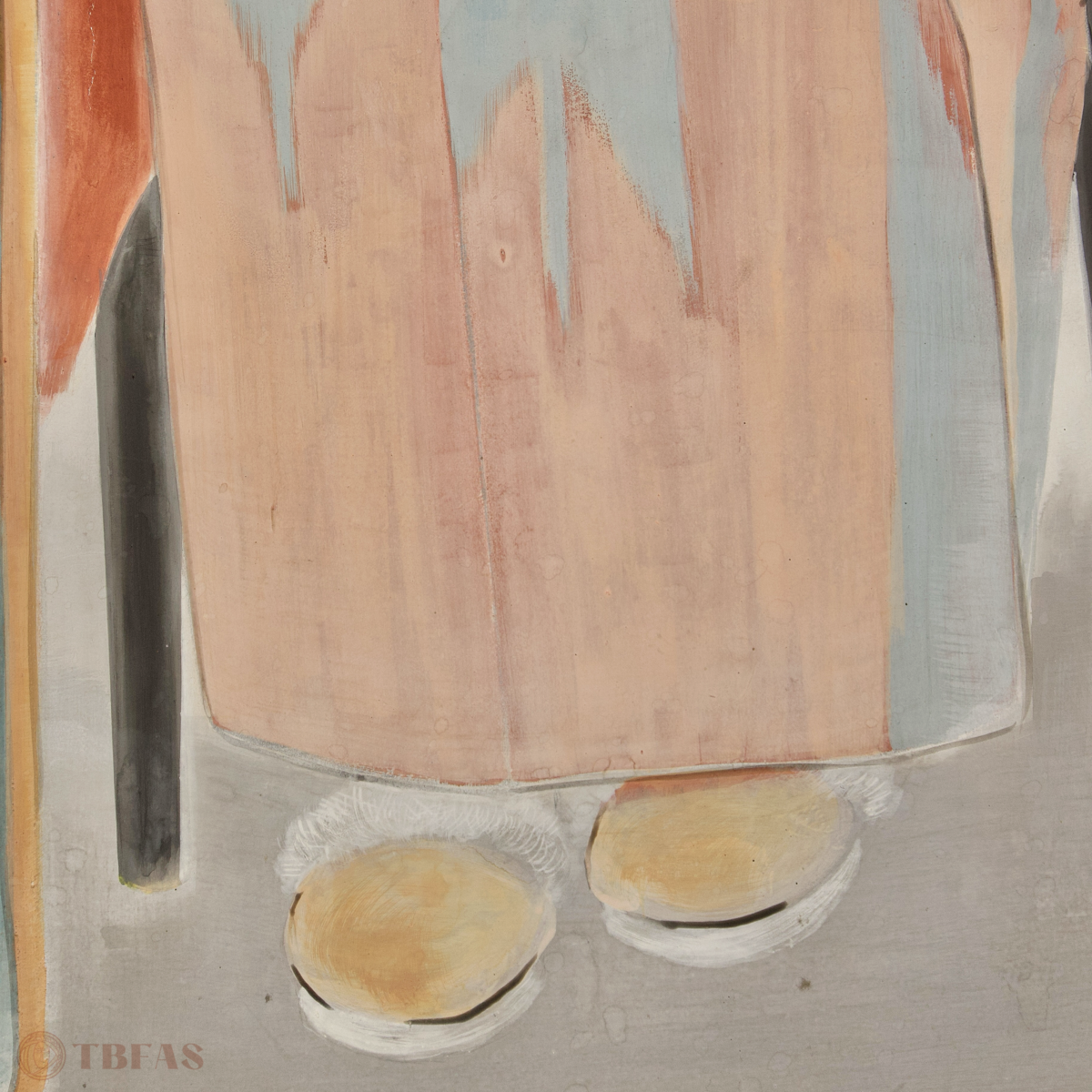
Availability: 1 in stock
Yakai
$0.00
| Item # | |
|---|---|
| ag_condition | |
| ag_artwork_year | |
| ag_medium_text | |
| ag_provenance | |
| ag_dimensions | |
| ag_category | |
| Price |
Enquire About Yakai
About This Artwork
Nagayama Toshio (1917–2002)
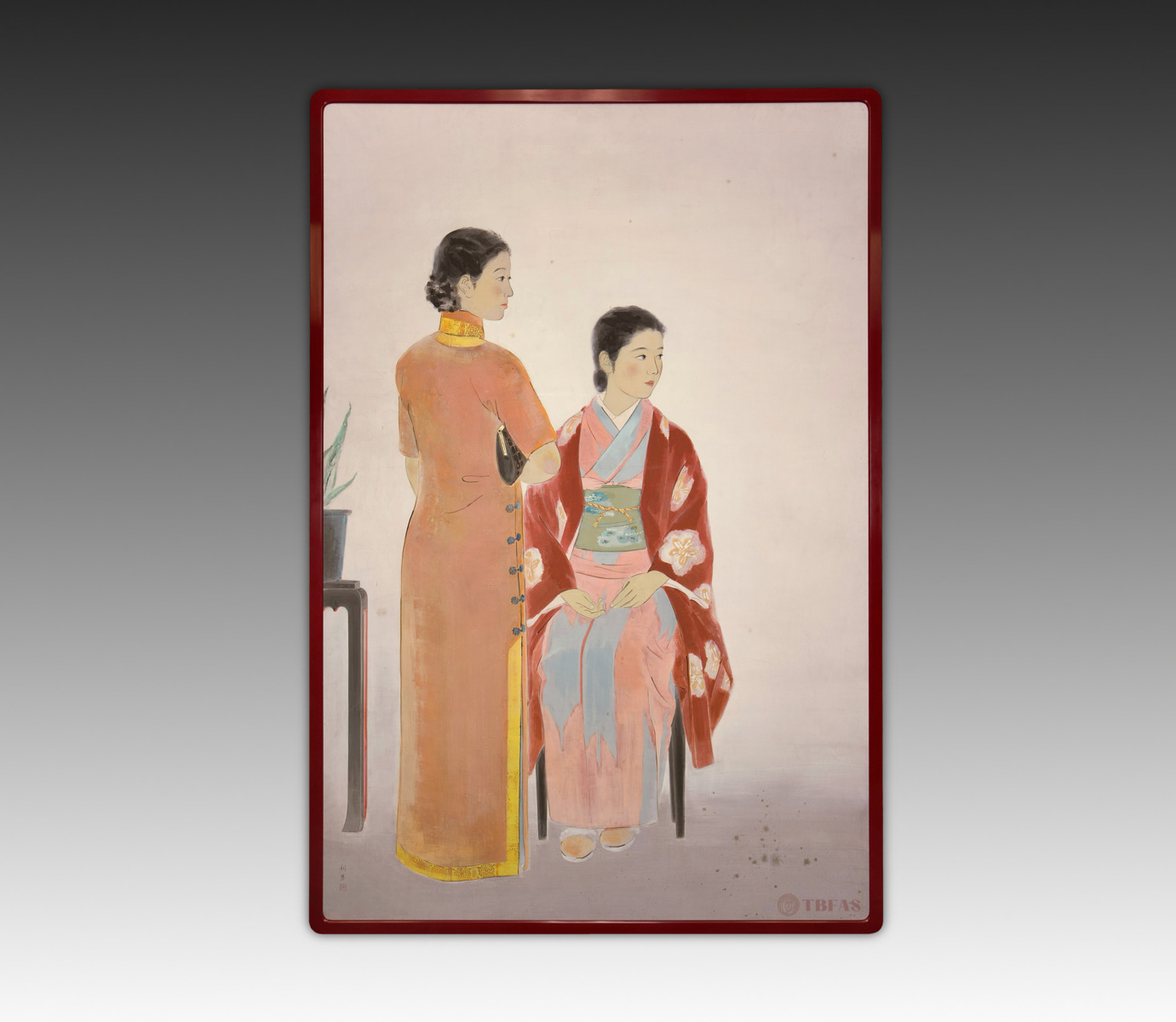
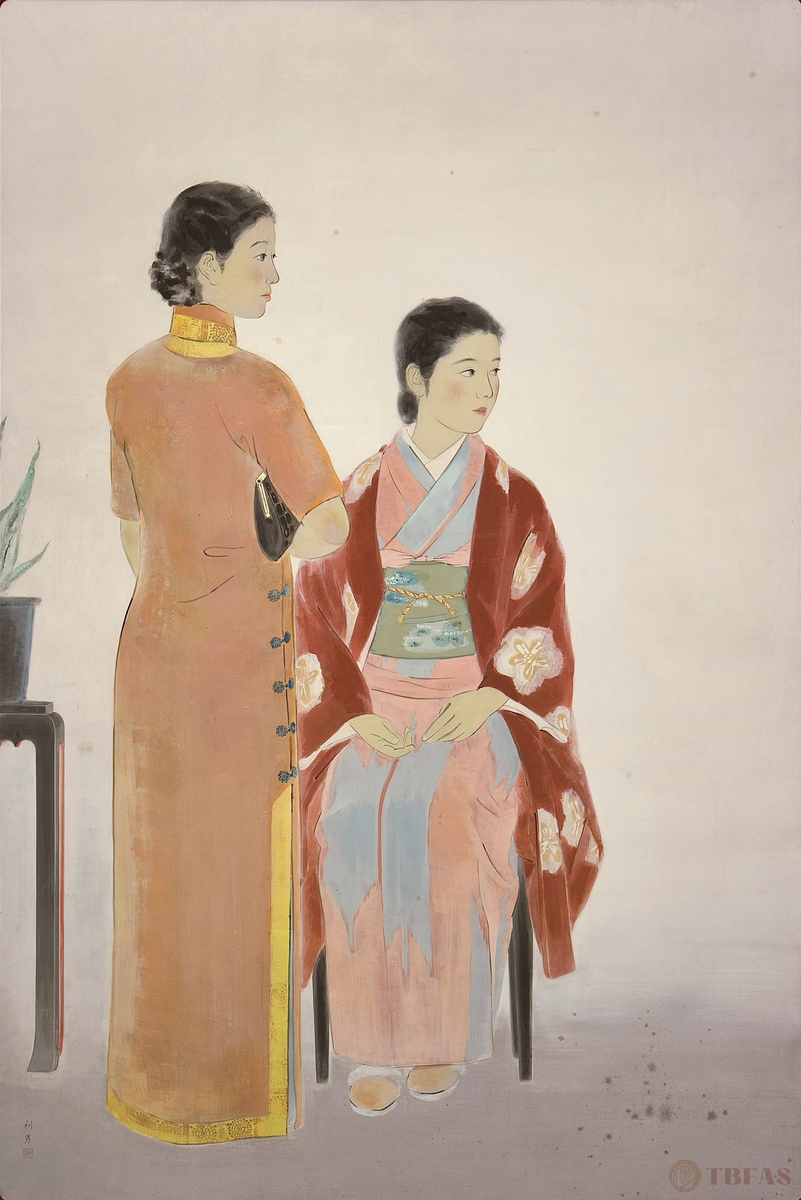
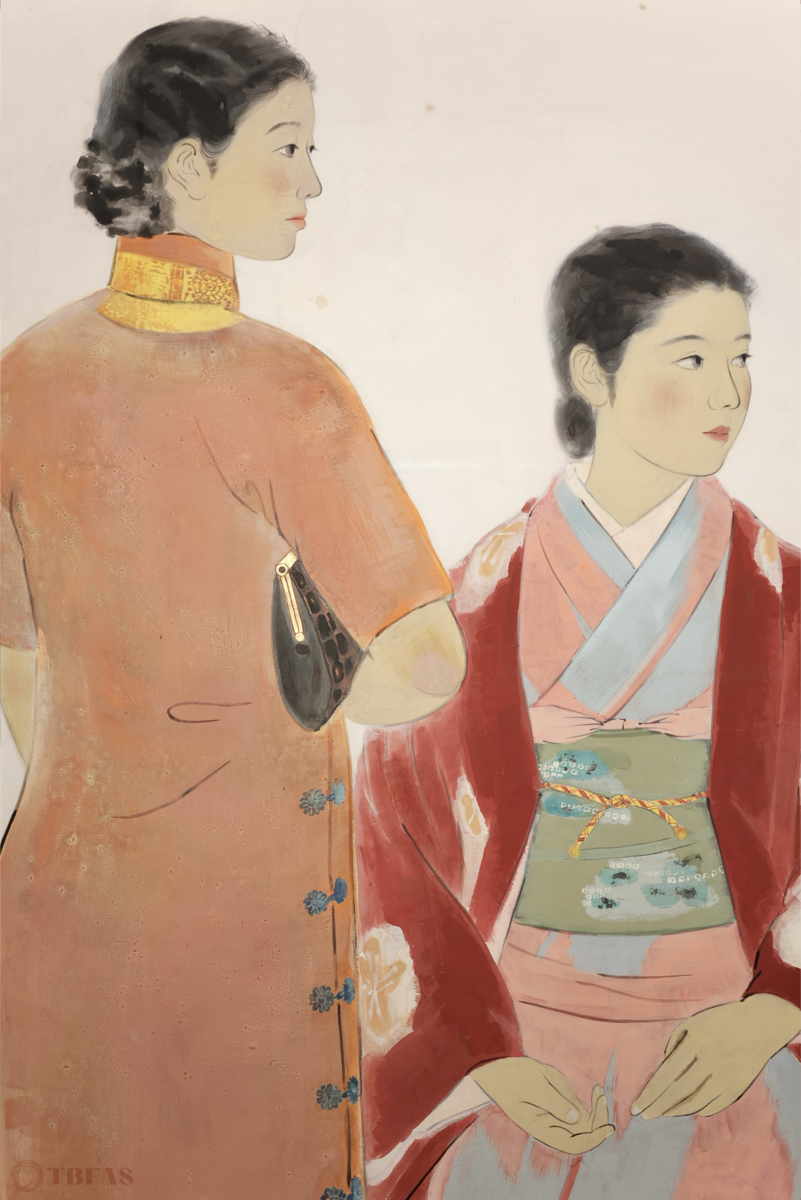
Yakai (Evening Meeting), 1939
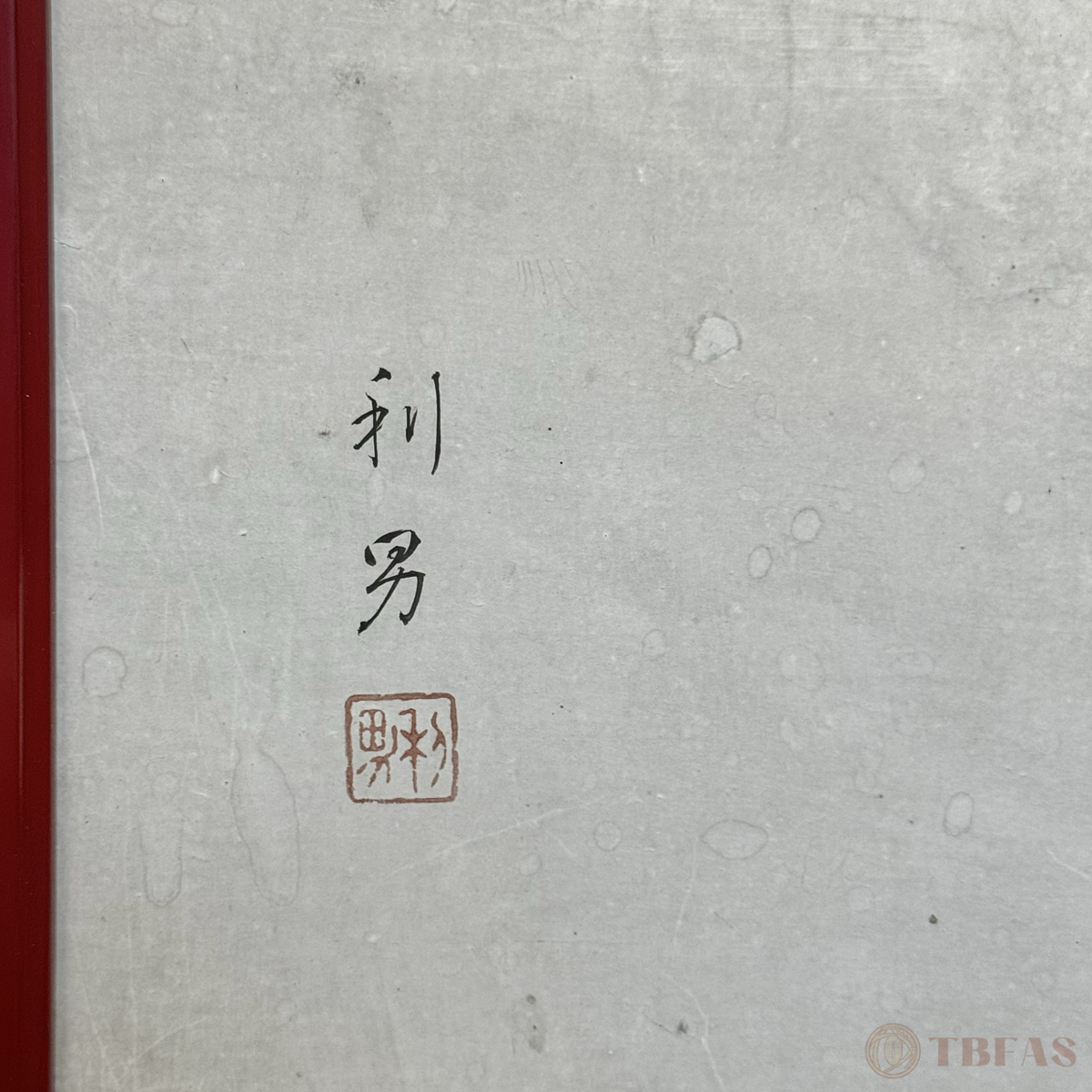
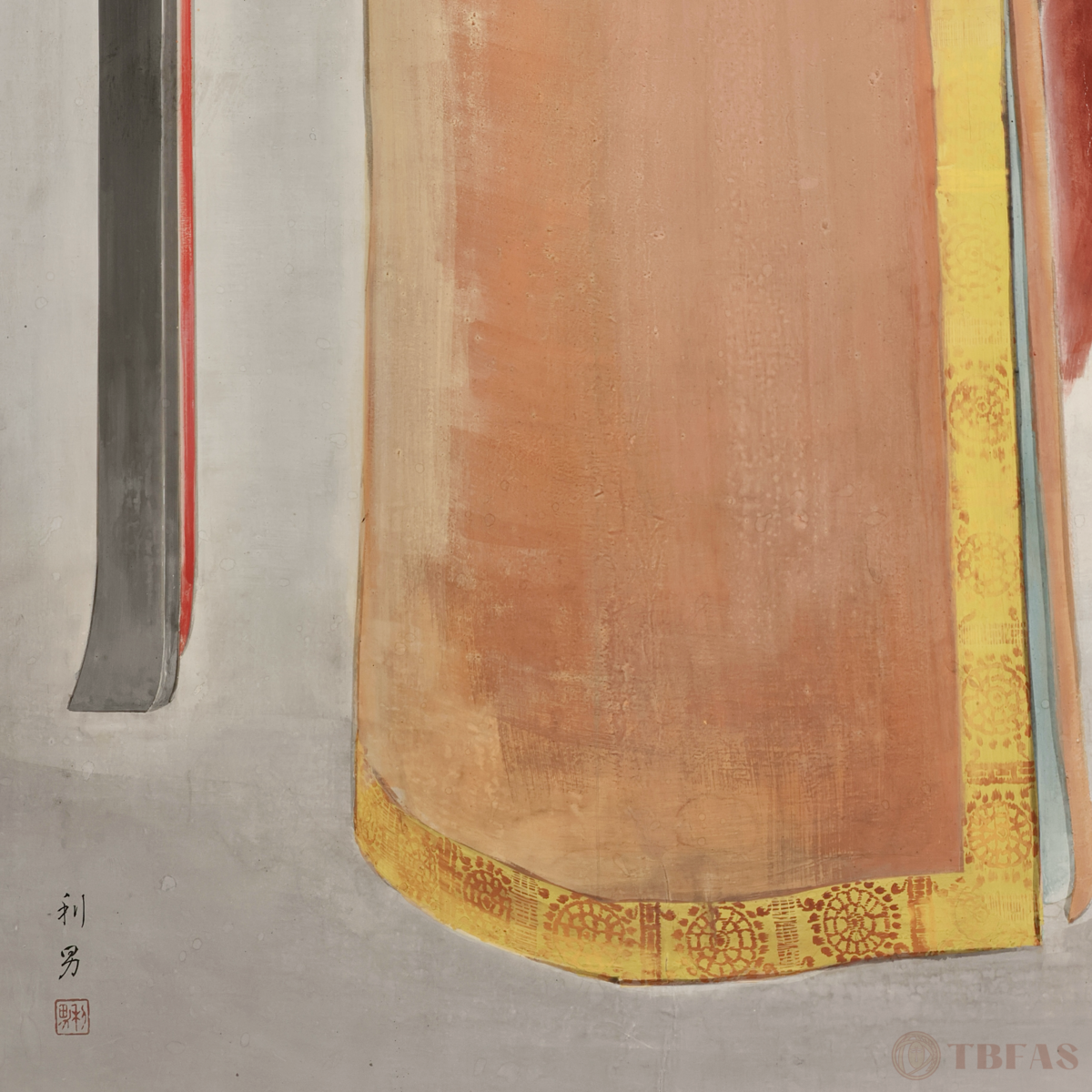
Signed Toshio and sealed
Framed panel; ink and color on paper
75 x 50 1/2 inches (195 x 128/3 cm)
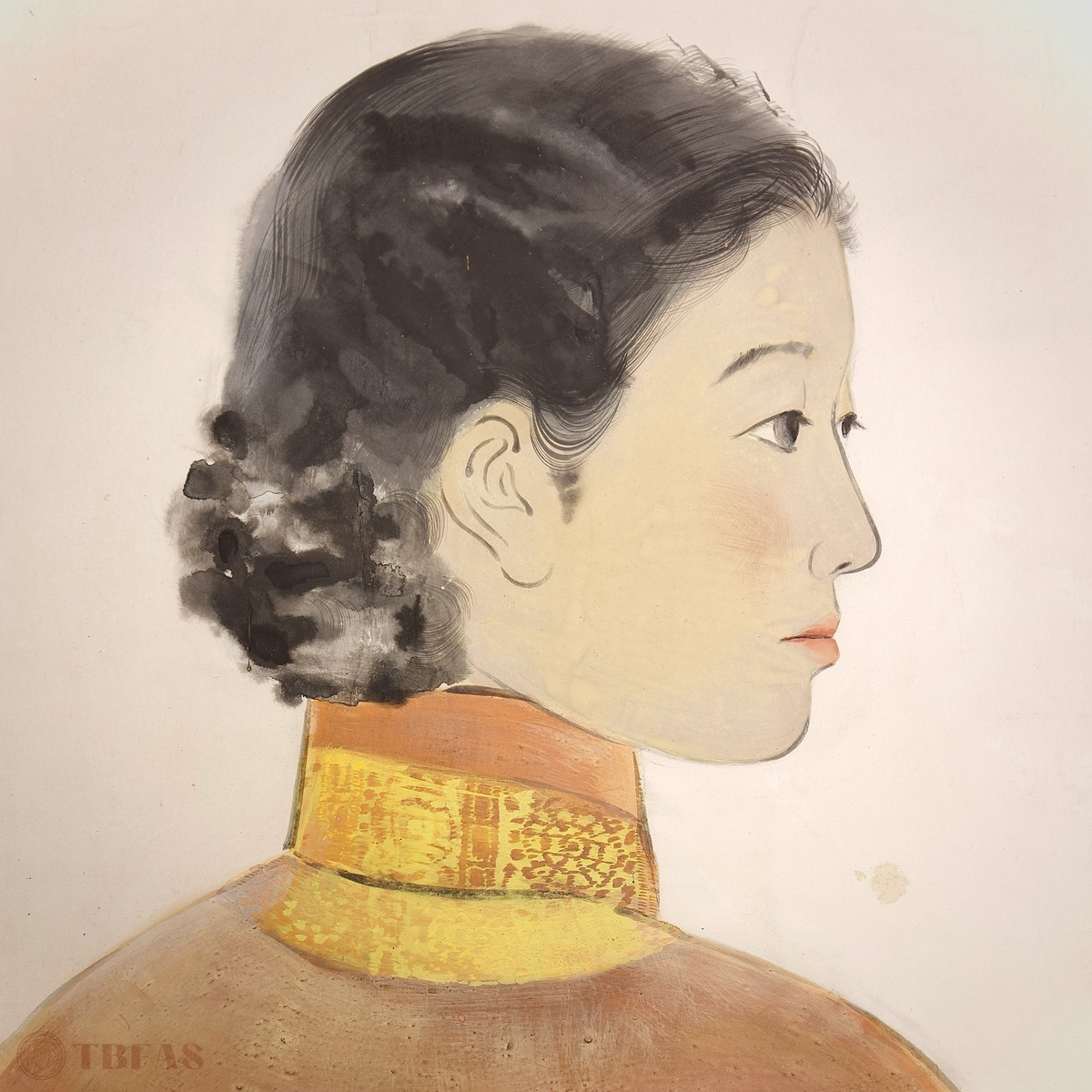
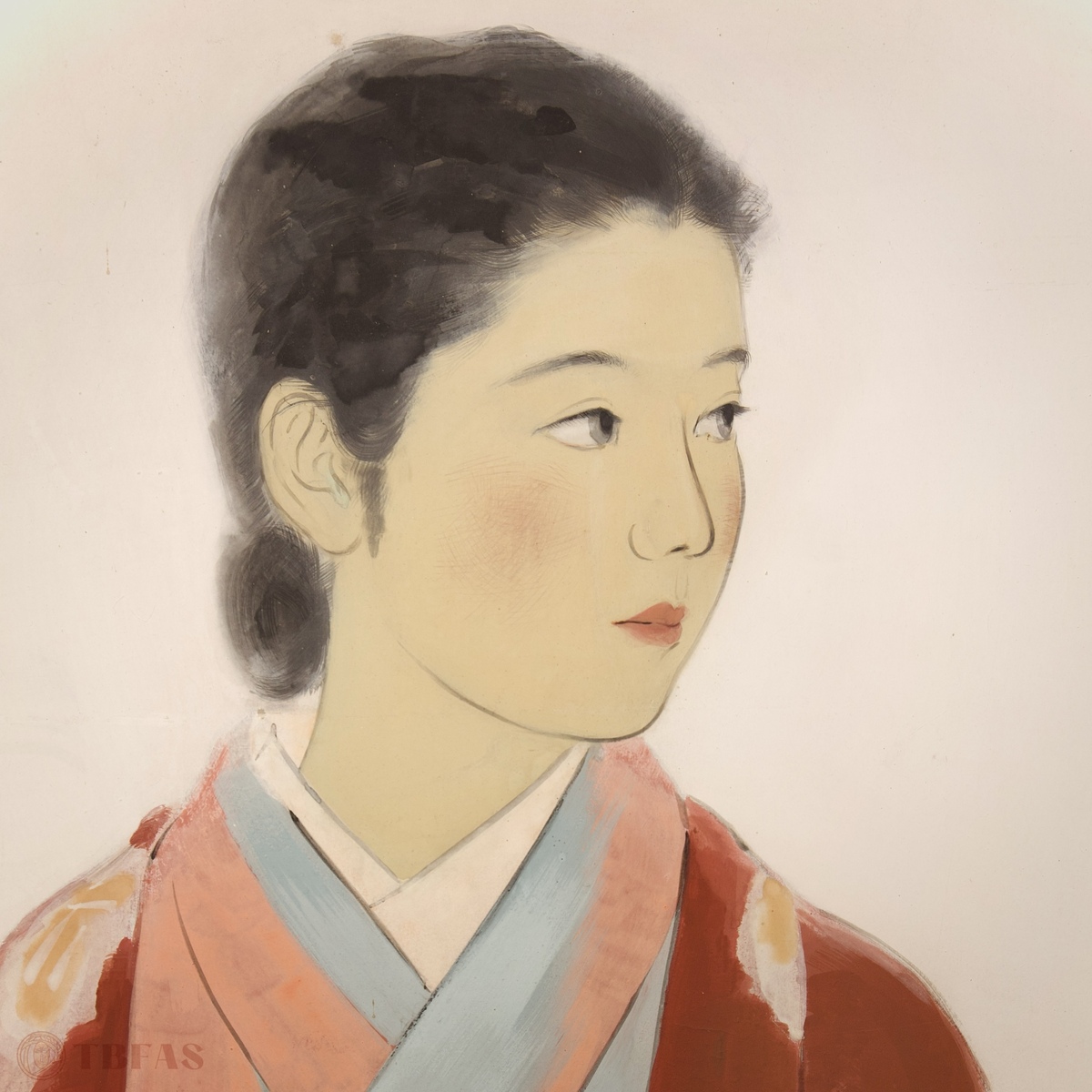
This painting once adorned the halls of the Meguro Gajoen in Tokyo, a center for official receptions and entertainment. The Gajoen offered Chinese cuisine and Chinese architectural details, part of the pan-Asian experience promoted by Japan in the 1930s. One of the two young women shown here wears a Chamson, a full-length Chinese dress, emblematic of chic modernity and sophistication.
Toshio, born in Fukushima Prefecture, expressed his desire to become an artist from an early age. He moved to Tokyo to study Japanese-style painting at Tokyo Bijutsu Gakko (today the Tokyo University of Arts). After graduating in 1939, he began to exhibit at the Nitten exhibitions and took part in the 4th, 6th, 8th, and 13th exhibitions. Among his exhibited works were “Window of Rain,” (1972); “Green Umbrella,” (1974); and “Imperial Garden of the Morning.”
Toshio had a long career as a Nitten judge and was also a judge at the Fukushima Prefecture Art Exhibit and the Haramachi City Art Exhibition.
From a young age he was concerned with the welfare of his peers, donating many of his art works to worthy causes. Yahata Shrine in his hometown received one of his paintings. Others were donated over the years to local schools, public halls and museums, including the Fukushima Prefectural Museum of Art; the Tokyo Tama Elderly Persons Center; and several foundations for the visually handicapped. In recognition of his generosity, he was named Naraha-cho (honored townsman No. 1) in 1996.
Provenance:
Hosokawa Rikizo Collection, Meguro Gajoen Museum
 English
  Japanese